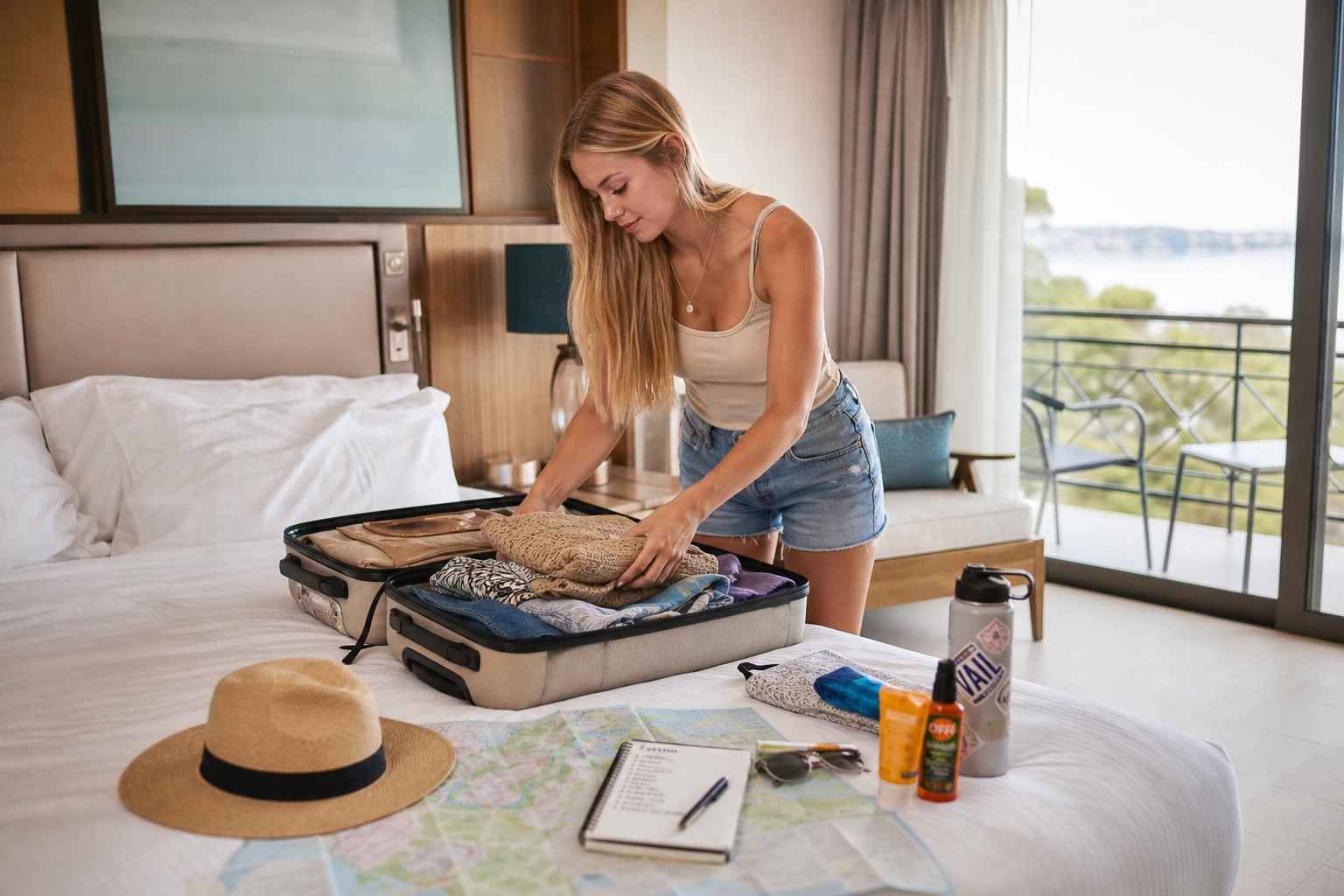
Young woman with blonde hair packing suitcase in hotel room with travel essentials including map, sunscreen and insect repellent

📋 Plan Your Trip

Louisiana Travel Tips
& Planning Guide

Everything you need to know before you go — from when to visit and what to pack, to hurricane safety and building the perfect itinerary.

Best Time to Visit Louisiana

Louisiana rewards every season — but some are better than others for specific goals.

Spring (Feb–May)

Best Overall

Mardi Gras, Jazz Fest, spring blooms, mild temperatures (65–80°F). The best time to visit for first-timers. Book early — this is peak season.
Fall (Sep–Nov)

Football & Festivals

LSU football, Festivals Acadiens, Halloween in NOLA, cooling weather. Great for campus visits. Hurricane season ends November 30.

Winter (Dec–Feb)

Budget & Mild

Mild temperatures (50–65°F), fewer crowds, lower prices. Christmas festivals in Natchitoches. Mardi Gras season ramps up in January.

Summer (Jun–Aug)

Caution

Extreme heat/humidity (95°F+) and hurricane season. Good for Essence Festival. Lowest prices and crowds. Plan indoor-heavy itineraries.

Woman packing suitcase with Louisiana travel essentials including sunscreen, insect repellent and map

Louisiana Packing Guide

Louisiana's climate and culture demand thoughtful packing. Here's what every Louisiana traveller needs.

Year-Round Essentials

  • Sunscreen (SPF 50+ minimum) — Louisiana sun is intense year-round
  • DEET-based insect repellent — mosquitoes are persistent April–November
  • Comfortable walking shoes — you'll walk a lot, especially in NOLA
  • Small daypack or crossbody bag for daily exploring
  • Portable phone charger / power bank

Summer Additions

  • Lightweight moisture-wicking clothing
  • Wide-brim hat and UV-blocking sunglasses
  • Reusable insulated water bottle — hydration is critical
  • Small personal fan (battery-powered)
  • Prescription medications with doctor's note

Festival & Swamp Tour Additions

  • Rain poncho (Louisiana weather changes fast)
  • Old shoes for swamp tours (you may get muddy)
  • Purple, green, and gold beads for Mardi Gras
  • Cash — many local food spots are cash-only
  • Portable first aid kit

Hurricane Safety Guide

If you're visiting during June–November, know these essential safety protocols.

📱 Before You Go

  • • Bookmark nhc.noaa.gov (National Hurricane Center)
  • • Download the FEMA App for emergency alerts
  • • Purchase travel insurance that covers hurricane cancellations
  • • Know your hotel's hurricane evacuation policy
  • • Identify the nearest evacuation route from your accommodation

🚗 During a Hurricane Warning

  • • Follow ALL official evacuation orders — do not wait
  • • Have a full tank of gas before a storm watch is issued
  • • Know I-10, I-49, I-55, and I-12 contraflow routes
  • • Stock 72 hours of water and non-perishable food
  • • Charge all devices and power banks

Recovery Awareness: Some areas of Louisiana are still recovering from Hurricane Ida (2021) and other recent storms. Some attractions, roads, and neighbourhoods may be affected. Check local conditions and support local businesses when visiting impacted communities.

Transportation Guide

How to get to Louisiana and move around it comfortably.

✈️ Getting to Louisiana

  • New Orleans (MSY) — Louis Armstrong International Airport. Main gateway with excellent connections nationwide
  • Baton Rouge (BTR) — Smaller airport; often cheaper for Baton Rouge/LSU visitors
  • Shreveport (SHV) — For North Louisiana visitors
  • Amtrak — The Sunset Limited and City of New Orleans trains serve Louisiana

🚗 Getting Around

  • Car Rental — Essential for exploring beyond New Orleans. Pick up at MSY airport. Major companies: Enterprise, Hertz, National
  • New Orleans Transit — Streetcars (RTA) connect Uptown, CBD, and French Quarter
  • Rideshare — Uber and Lyft operate in all major cities
  • Bike Rentals — Blue Bikes in New Orleans for the flat Uptown areas

🛏️ Where to Stay

  • New Orleans French Quarter — Most expensive, most convenient for sightseeing
  • Garden District/Uptown — Quieter, great base for Tulane visits
  • Baton Rouge — Cook Hotel on LSU campus (unique); downtown hotels along the levee
  • Lafayette — Boutique B&Bs in the historic downtown neighbourhood

Frequently Asked Questions

Louisiana, particularly New Orleans, requires normal urban travel precautions. The tourist areas (French Quarter, Garden District, Magazine Street, Warehouse District) are generally safe during the day and well into the evening. Exercise the same caution you would in any major US city — be aware of your surroundings, don't flash expensive items, and avoid poorly-lit areas at night. Check current safety advisories at travel.state.gov.
Not if you're staying only in New Orleans — the city is very walkable and has streetcars, rideshare, and bike rentals. However, to visit LSU, plantation country, Cajun Country, or the bayous, you absolutely need a car. Renting from the airport is recommended. Louisiana has mostly flat, easy-to-drive roads.
Louisiana can be visited on almost any budget. Daily costs range from $100/day (budget — mix of cheap eats and free attractions) to $400+/day (fine dining, premium accommodation). New Orleans during Mardi Gras or Jazz Fest is peak pricing. Fall and winter outside major festivals offer excellent value.
Accessibility varies considerably. New Orleans' French Quarter has uneven cobblestone streets that can be challenging for wheelchairs — but most major attractions and museums have accessible entrances. Modern hotels comply with ADA requirements. LSU's campus is large but generally accessible. Always call venues in advance to confirm accessibility features, as older buildings may have limitations.
Absolutely. Audubon Zoo, the WWII Museum, City Park, LSU's Mike the Tiger, swamp tours, and the Steamboat Natchez are all fantastic family experiences. The French Quarter at night is adult-oriented (especially Bourbon Street), but during the day it's perfectly family-friendly. Mardi Gras parade routes like St. Charles Ave are family-friendly; Bourbon Street is decidedly not.
No special vaccinations are required for Louisiana. However: bring DEET insect repellent (mosquitoes can carry West Nile Virus in summer), use sunscreen religiously, stay hydrated in the heat, and be cautious around natural water bodies (leptospirosis risk from flood water). Travellers with compromised immune systems should consult a physician before visiting swamp areas during summer. Always have travel health insurance.

Complete Louisiana Itineraries

Copy and customise these proven itineraries for your own trip.

🎷 3 Days: Pure New Orleans

Day 1

French Quarter & History

Beignets at Café Du Monde, Jackson Square, St. Louis Cathedral, French Market, WWII Museum. Evening on Frenchmen Street for live jazz.

Day 2

Campuses & Garden District

Morning at Tulane & Loyola campuses. Lunch at Camellia Grill. Garden District mansions walk. Evening cocktails at Carousel Bar.

Day 3

Swamp Tour & Bayou

Day trip swamp tour (Jean Lafitte NP or Pearl River). Evening at Commander's Palace for dinner (book ahead).

🎓 7 Days: Universities & Culture Road Trip

Day 1–2

New Orleans + Tulane/Loyola

Arrive NOLA. French Quarter, WWII Museum, evening jazz. Day 2: Tulane & Loyola campus walk, Garden District, Steamboat cruise.

Day 3

River Road Plantation Drive

Drive Great River Road. Oak Alley Plantation. Whitney Plantation. Arrive Baton Rouge evening.

Day 4–5

LSU & Baton Rouge

Full LSU day — Mike the Tiger, Memorial Tower, tailgating (if football season). State Capitol tour. USS Kidd museum. LSU Rural Life Museum.

Day 6–7

Lafayette + ULL + Swamp

ULL Cypress Lake. Vermilionville. Atchafalaya swamp tour. Zydeco dancing. Boudin crawl through Scott, LA.

Your Louisiana Adventure Awaits

Get personalised trip planning advice, seasonal guides, and university campus tips in your inbox.

No spam. Unsubscribe anytime.